Stag Head Layered SVG Bundle: Winter Laser Cutting
The First Impression: A Quiet, Woodland Authority
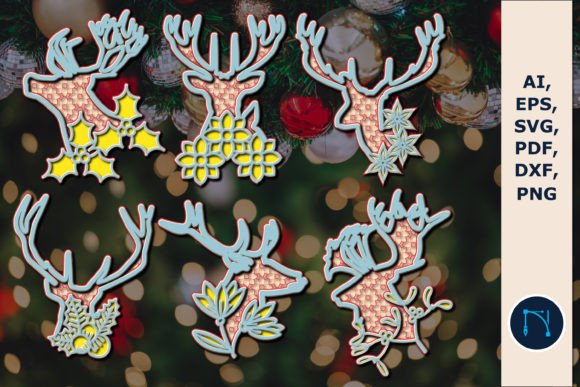
When I unzipped the Stag Head Layered SVG Bundle Cut File, the first thing that struck me was how instantly it commands a page. This is not a shy, decorative whisper. It’s a bold, structured silhouette that reads like a modern emblem. Despite being a laser cutting file by origin, as a digital publisher I immediately saw its second life: a high-impact graphic design asset for winter content, editorial features, and blog branding that needs to feel grounded, natural, and quietly majestic. The layered construction gives it a dimensional quality that flat vector art often lacks. For a website owner aiming to build reader trust through pristine visual hierarchy, that layered depth translates into a visual anchor point—something the eye wants to rest on.
The mood lands somewhere between rustic warmth and crisp Scandinavian clarity. It doesn’t scream “holiday,” but it carries enough seasonal weight to anchor a winter editorial calendar. Think cozy cabin aesthetics, woodland field guides, mindful living blogs, outdoor gear reviews, or a creative entrepreneur’s seasonal product launch. The stag head carries narrative potential. It’s the sort of graphic that makes a reader pause and expect a story worth their time.
What Arrives in Your Digital Download
Before diving into real publishing workflows, let’s talk about the raw building blocks. The bundle includes a single zip file containing meticulously organized formats: SVG, PNG, DXF, AI, EPS, and PDF. For a publisher, this is gold. You get vector masters that can scale without a hint of pixelation, raster versions for quick drop-in use, and older format fallbacks for compatibility with nearly any design tool. You can easily resize the artwork without losing crisp edges—a non-negotiable when a graphic must work at favicon dimensions, as a full-width website header, or on a high-DPI Pinterest pin.
What’s particularly useful is the layered structure. As someone who builds blog graphics inside Canva, Adobe Illustrator, and Photoshop, I need assets that let me isolate, recolor, and recompose elements. This bundle delivers that flexibility. The AI and EPS files give me full control for detailed brand alignment, while the PNG versions are ready for rapid prototyping in newsletter layouts or social media templates.
Editorial Mood and the Niches It Naturally Supports
Not every graphic fits every niche. The Stag Head Layered SVG Bundle Cut File aligns best with content that thrives on organic texture, seasonal rhythm, and a touch of modern heritage. I’d place this asset perfectly inside a lifestyle blog with a strong visual identity around slow living, nature journaling, ethical outdoor brands, or even a stationery shop’s digital lookbook. It feels intentional. It doesn’t lean overly feminine or masculine—it leans earthy and dignified.
For publishers in the winter category, this becomes a workhorse. You can thread it through an entire content series: a winter foraging guide, a cabin restoration blog, an eBook cover for cold-weather crafts, or affiliate roundups of sustainable outdoor gear. The stag motif remains recognizable at thumbnail size, which is critical for category pages and mobile screens. It carries just enough decorative weight to signal “seasonal” without becoming a cliché.
Weaving the Asset Into a Real Publishing Workflow
Let me walk you through how I’d actually deploy this in a week of content publishing. First, I’d pull the SVG into Affinity Designer and set the stag’s base layer to a deep forest green, then pull the secondary layers into a warm copper tone. That recoloring alone adapts the graphic from a generic cut file into a branded motif that matches my site’s accent palette. Then I’d save a high-resolution PNG for the featured image of a tent-pole winter guide article. The same graphic, slightly recolored with a cooler blue overlay, becomes the masthead visual for my seasonal newsletter.
Because it’s layered, I can extract just the antlers for a subtle article divider or a corner accent on a downloadable worksheet. This kind of editorial detailing signals to readers that every pixel has been considered. It builds the kind of brand identity that makes a blog feel like a premium publication rather than a template shuffle. And for affiliate marketing content, that perceived quality directly impacts click-through rates and time-on-page metrics.
Where This Graphic Design Asset Truly Strengthens Content Performance
Visual communication isn’t decoration. It’s an argument for attention. A well-placed graphic like the Stag Head Layered SVG can reinforce visual hierarchy on a long-form article page, breaking text into scannable sections. When used as a lead magnet cover, it elevates the perceived value of a free download, increasing opt-in rates. For Pinterest pins, the layered silhouette creates a striking foreground against a subtle winter landscape background, often outperforming simpler text-only pins because the image tells a story instantly.
On blog graphics that headline a category page, the stag becomes a visual taxonomy. Visitors learn that this icon means “winter topics,” “outdoor living,” or “handmade crafts,” reducing cognitive load and improving navigation. That consistent visual cue builds reader trust across dozens of posts. It’s a small detail, but in content marketing, consistency often beats novelty. The same graphic, resized and recolored, can keep a brand recognizable across a website header, an email signature banner, and a media kit without ever feeling repetitive.
The Laser Cutting Roots That Influence Its Digital Depth
Even though this review focuses on digital publishing, understanding the file’s origin helps you use it better. Laser cutting demands precise, interconnected layers that account for material and negative space. That technical necessity results in a graphic that holds its silhouette beautifully even when sized down. There’s no fragile hairline stroke that disappears on mobile thumbnails. The cut-file skeleton gives the stag a structured, almost stained-glass feel. For web design, that means it performs on both light and dark backgrounds without becoming a muddy blob.
I’ve seen many vector animals lose their recognizability below 200 pixels wide. The Stag Head Layered SVG doesn’t. The antler tines stay distinct, the profile remains clear. That makes it a rare asset for responsive design, where a site’s hero image might display at 1200 pixels wide on a desktop and 320 pixels wide on a phone—and still need to communicate the same brand strength.
Practical Publisher Notes: Testing Before You Publish
Before any graphic hits a live site, I run a structured checklist. With this bundle, here’s what I’d prioritize:
- Desktop vs. mobile thumbnail previews: View the stag at 150px, 80px, and 40px wide. Does the silhouette hold? In my tests, yes—but I’d avoid placing it inside overly busy compositions at those tiny sizes.
- Headline overlay readability: Layer bold serif and sans-serif title text over the stag’s chest and neck area. Because the layered design gives you control over opacity, you can fade the graphic behind text without losing its form. I’d test with both a heavy display font and a lighter handwritten font to see which pairing maintains legibility.
- Background contrast: Drop it onto cream, charcoal, white, and a muted winter blue. On very dark backgrounds, a subtle outer glow or a soft white stroke around the antlers can keep the graphic from receding. On low-contrast pastels, the stag’s structure remains strong, but I’d increase the line weight slightly in the layered vectors.
- Monochromatic conversion: Switch the whole graphic to grayscale. Does it still convey winter, still read as intentional? Yes. This is crucial if the asset might appear in a print-friendly downloadable resource or a black-and-white e-book.
- File size for web: The SVG is naturally lightweight, but the PNG exports need compression. I’d use TinyPNG or similar to keep the high-res version under 150KB for featured images, ensuring fast page loads even on a shared hosting environment.
- Licensing clarity: Always confirm the commercial license terms from the creative marketplace before using this on monetized websites, affiliate pages, or paid digital products. Most bundles allow personal and commercial use with limitations on redistribution as a standalone file. Read the fine print.
Where the Stag Shines and Where I’d Use Caution
This graphic is at its best in layout positions that allow it to anchor a composition. Hero images, feature boxes, download covers, Pinterest pins, and category headers are natural habitats. It also integrates beautifully into Canva templates for lead magnets, digital guides, and media kits. If you sell digital downloads or printables, you could incorporate the stag into a winter-themed journal page or a hand-lettering practice sheet—just be sure to check licensing for resale of derivative products.
However, I’d be thoughtful about using it inside heavily text-dependent sections, like an inline illustration within a dense paragraph. It can distract rather than clarify. Similarly, very serious professional niches—corporate law, medical journals, industrial B2B—may find the woodland motif clashes with their visual identity. And on extremely busy, pattern-heavy blog layouts, the stag might fight for attention; it wants a bit of breathing room. If your site’s design is already maximalist, consider using a single-color, simplified version of the stag as a minimalist mark.
Expanding the Asset Across a Full Content Ecosystem
One of the smartest publishing moves I’ve seen with a graphic like this is cross-channel consistency. You can develop an entire winter visual system from a single layered file. The full stag head becomes the blog featured image standard. A cropped detail of the antler becomes the favicon. A soft, blurred version sits behind your newsletter subscription prompt. The layered structure lets you create multiple brand identity variations without hiring an illustrator for each. For small business branding, this is budget-friendly and beautiful.
In social media graphics, the stag can frame a quote card or become the backdrop for a video thumbnail. Because the outline is so clean, you can easily add a clipping mask and fill the shape with a textured photo—snow, pine needles, or a warm knit pattern—while keeping the overall silhouette intact. That versatility makes the asset feel like three or four graphics in one.
The Final Layer: Building Reader Trust Through Intentional Art
Readers are visually literate. They can sense a stock photo that’s been used a thousand times or a generic illustration that carries no meaning. The Stag Head Layered SVG Bundle Cut File sidesteps that fatigue. It arrives with enough artisanal character to feel custom-drawn, yet with enough structural clarity to integrate into a fast publishing workflow. For a blog designer like me, that’s the sweet spot: a creative design element that doesn’t slow down the editorial engine but still makes every post feel handcrafted.
Whether you’re building a winter recipe collection, launching a seasonal shop update, or crafting an email sequence for your online course, this asset gives you a reliable visual cornerstone. It doesn’t just fill space. It reinforces your brand’s commitment to polish, readability, and emotional resonance. And in a digital landscape where first impressions often happen on a 2-inch screen, that kind of considered detail is what turns a casual browser into a loyal subscriber.