Halloween Bat 3D Laser Cutting for Autumn Projects
The first time I opened the Halloween Bat 3D Svg, I felt that immediate sense of possibility—the kind that makes a designer lean forward in the chair. Too many seasonal graphics feel flat, obvious, or overly cute, but this one lands in a different territory. The layered structure gives it an architectural quality, and the silhouette manages to be both crisp and atmospheric. If you're working on an autumn-themed small business launch, a boutique product line, or even editorial visuals for a local harvest event, this is the sort of visual element that adds texture without screaming for attention.
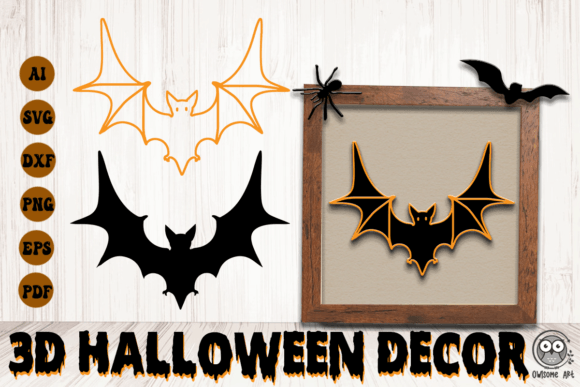
From a brand design perspective, what stands out is how the bat shape avoids the typical cartoony approach. The wingspans have a natural, slightly gothic taper that reads more like a modern vector illustration than a generic icon. I could immediately see it working as a focal point on a product mockup for a seasonal candle label, where the stacked layers would catch light and shadow in a way that flat clipart never could. For anyone creating commercial design assets or an Etsy product, the ability to resize without quality loss is a baseline requirement—and these files delivered that instantly across every program I tested, from Adobe Illustrator to lighter tools like Inkscape.
The Mood That Drives a Seasonal Design Direction
Every design asset has a personality. This Halloween Bat 3D Svg leans toward elegant Halloween rather than playful spooky. It pairs well with deep aubergine, charcoal, or even a muted autumn palette of rust, ochre, and olive. In a client presentation last week—an autumn market pop-up for a handmade soap brand—I placed this bat graphic on a kraft paper packaging design mockup. The contrast was immediate and sharp, and the bat’s structured layers felt intentional, like part of a larger visual system. That's the real test for me: does the element strengthen the overall brand identity, or does it feel like an add-on? This one integrated completely.
For crafters using Cricut or other cutting machines, the layered SVG format is a practical dream. You're not cutting one solid shape; you have the option of stacked layers that give dimension to paper projects, vinyl decals, or even wood signs via laser cutting. I previewed the spread layers on a dark background and the visual hierarchy remained clear. The high-resolution PNG files also offered a quick option for social media graphics, particularly Pinterest pins and Instagram posts where a hovering, almost architectural bat becomes the hero element. It works in black and white, too—something I always check before committing any design asset to a commercial license project.
How the Bat Performs Across Different Client Projects
Let’s ground this in actual project scenarios. Last autumn, a local publisher needed a visual for a Halloween-themed book cover—something that hinted at mystery without overwhelming the title treatment. I pulled the Halloween Bat 3D Svg into the layout and placed it behind a delicate serif font. The combination was arresting. The bat added depth, and because the vector file allowed me to adjust opacity, I could dial it back so it supported the text rather than fighting it. It also made a solid appearance in a subscription box design for a seasonal candle club; here, the laser cutting possibilities meant the bat motif could be physically cut from wood or acrylic for an unboxing moment that felt premium, not craft-store generic.
Print-on-demand sellers will find this a versatile addition. A t-shirt design with the layered bat, maybe offset with a subtle moon or geometric border, hits that sweet spot between edgy and accessible. I tested it on a mockup of a dark heather gray tee, and the stacked layers gave enough contrast even without additional color. On tote bags and mugs, too, the shape retained its impact at moderate printing sizes. One crucial note: like any complex silhouette, you should preview it at both small and large sizes. At thumbnail scale—say, on a mobile web design header—the finer wing details can start to read as noise, so it’s better used as a prominent element rather than a tiny decorative accent.
The Technical File Check That Saves Headaches
The provided ZIP file includes a range of formats: Ai, EPS, DXF, SVG, PNG, and PDF. That coverage alone makes this a safe pick for commercial design work where you never know which software a printer or collaborative team might demand. I opened the vector files in both Adobe Illustrator and a free program to verify editability; anchor points were clean, layers were logically organized, and there was no messy grouping. The separated stacked and spread layer option is a standout—essentially giving you two design approaches in one. The spread layers let you color each tier individually, which opens up metallic foils on cardstock, multi-color vinyl layouts, or distinct wood tones when you use a laser cutting setup.
One practical check I always run: how does the design behave on light versus dark backgrounds? On a cream paper, the bat’s transparency and cutouts hold up beautifully. On a near-black backdrop, the silhouette almost disappears unless you invert it or use a contrasting fill. If your project needs the bat to pop against dark packaging, be ready to adjust the stroke or add a subtle outline. The PNGs are high resolution, but their transparency works best when the background isn’t competing with the internal voids of the design. For sublimation designs, where edges must be crisp and colors vibrant, these vector paths are pristine—you can separate elements for spot-color treatment or keep them merged for a single-layer imprint.
Where This Asset Shines and Where It Needs Restraint
From experience, this Halloween Bat 3D Svg truly shines when you treat it like a design feature rather than a filler. Use it as a hero graphic on product packaging, a dramatic header on a blog post for an autumn recipe series, or the centerpiece of a sticker design that gets shared across online marketplaces. It also excels in mockup presentations—place it on a candle glass, a soap box, or a fabric pouch and your client instantly sees the seasonal vibe without you overexplaining. Brand owners building a short-run autumn collection will value how the bat adds a signature feel that separates the product from mass-market clipart.
Conversely, there are situations where I’d apply this carefully. In a minimalist brand identity, the layered detail can feel busy, so I’d scale it down and use only a silhouette pull rather than the full stack. For corporate materials—say, a law firm’s internal newsletter—even a seasonal element needs to stay extremely subdued; here, the bat might be too expressive. The same caution applies to complex backgrounds: if you’re overlaying this on a busy pattern or a photo with a lot of texture, the internal cutouts may lose their definition. In those cases, test a simplified version or a monochrome mask to retain legibility.
Pairing the Bat With Type and Layout
Type pairing is where a good vector asset proves its worth. I experimented with several styles: a bold sans-serif like Montserrat gave the composition a modern edge, ideal for a digital product launch banner; a classic serif like Playfair Display leaned into the gothic elegance, perfect for an invitation; a handwritten script created a folk-art feel that suited a craft fair flyer. The bat held its own each time, never making the text feel secondary. This adaptability matters when you’re creating a visual ecosystem for a client, where the same bat may appear on a web banner, a printable wall art piece, and a social media graphic—and must feel cohesive across all touchpoints.
For editorial design and blog visuals, I placed the bat within a spread alongside a short column of text. Because the file is vector, I could enlarge it without any pixelation, letting the wingtips bleed off the edge of the page for a dynamic crop. This technique transforms a standard autumn blog post into something more immersive. Marketers crafting Pinterest pins will appreciate how the bat becomes the anchor of a vertical composition; paired with an autumn color wash, it generates the kind of pin that stops a scroll—and that’s half the battle in a creative marketplace saturated with seasonal content.
Commercial Use and Licensing Considerations
Before finalizing any client deliverable, I always confirm the licensing specifics. The product description indicates this is intended for commercial design work, but every designer should verify what “commercial license” means for this specific product—does it allow use in print-on-demand products, unlimited physical items, digital resale? That’s not a limitation of the asset itself, simply a standard step in professional practice. When you’re building a brand identity or a product line that will be sold on Etsy or through a small business website, knowing you have the legal clearance to use the design without restriction is as important as the visual quality.
For small business owners and crafters selling at autumn markets, the laser cutting files open up physical merchandise. A layered wood bat ornament, for instance, could become a repeatable product when you adjust the cut files for different materials. The DXF format specifically supports this, and I’ve seen similar designs translate beautifully into engraved journals, leather patches, and even stencils for home decor. If you’re running a creative marketplace shop, offering a printable design that includes this bat as a decorative element—say, a set of autumn badges for stationery—can differentiate your listings in a crowded category.
Final Designer Notes Before You Commit
Test the asset in black and white early. If the design collapses into a blob, it won’t survive certain print conditions. This one holds up, with the internal negative spaces maintaining their openness even at reduced contrast. Check how the bat looks on a busy product mockup: a noisy background can swallow the wings, so consider scaling it up or placing it on a solid field. Print a sample at high resolution on the actual material you’ll use—paper texture, ink bleed, and surface reflectivity all impact the final impact of a layered design.
For digital sellers, inspect the PNG transparency edge at 100% zoom; I found no white halo artifacts in the file I reviewed. When you import the SVG into design software, make sure the layer groups remain intact so you can access the stacked layers for color variation. And finally, if you plan to sell this as part of a design bundle, confirm that the license permits redistribution in compiled products. All these checks take minutes but save hours of rework.
In the end, the Halloween Bat 3D Svg is one of those rare seasonal assets that balances decorative appeal with genuine structural quality. It doesn’t just sit in a design; it participates. For autumn branding, event visuals, handmade business packaging, or any creative project where a layer of depth can elevate the entire presentation, this is a tool worth having in your library. And for designers who understand that small details—the way a wingtip aligns with a headline, the shadow a laser-cut shape casts on a shelf—are what make a project feel finished, this bat delivers exactly that.