3D Layered Christmas Ball 03 SVG: Real Embroidery Review
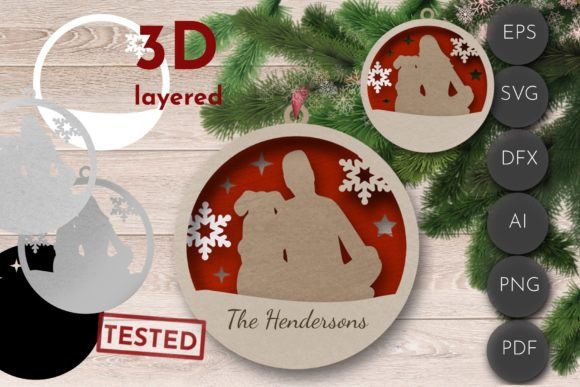
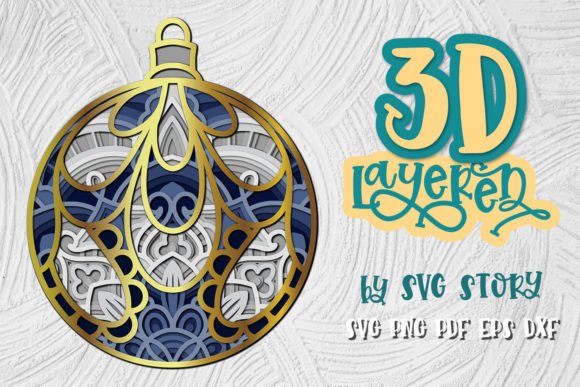
I opened the 3D Layered Christmas Ball 03 SVG file set expecting another standard ornament design. What I found instead was a carefully structured layered piece that immediately felt like it belonged on something customers would pick up, turn over, and smile at. The shape reads as a classic round bauble, but the internal cuts and layered sections give it a dimensional personality that feels alive even before you start planning stitch types. This is not a flat, simple outline. It asks you to think in layers, in depth, in texture. For an embroidery designer who builds products by hand or runs a small craft business, that kind of design intelligence matters.
The mood lands squarely in cozy winter territory without feeling cartoonish or overly rustic. There is a quiet elegance to the way the layers nest inside each other. It reminds me of papercut ornament templates, the kind people frame or hang in windows, and that visual association actually helps when you think about how thread will behave across each section. The layered structure naturally guides you toward a mix of satin stitch edges, fill stitch interior segments, and maybe even some openwork areas if you are feeling adventurous with your digitizing.
First Impression: What This Design Communicates Before a Single Stitch
The 3D Layered Christmas Ball 03 SVG carries a clean, festive, slightly traditional personality. It does not scream for attention, and I mean that as a compliment. Overly busy holiday designs often shrink poorly or become unreadable on textured fabric. This one holds its shape well in my mind even at reduced sizes because the layers are distinct without being fussy. The ornament silhouette is universally recognizable. Customers see a Christmas ball and they immediately understand the product context, whether it is on a kitchen towel, a baby onesie, or a canvas tote bag.
What truly sets the first impression apart is the layered depth. Flat ornament designs often rely on printed detail or single-color thread fill to carry visual weight. A layered design like this, when properly translated into machine embroidery, can use stitch direction changes and subtle color shifts between layers to create genuine dimensionality. That is the kind of detail that makes a handmade product feel premium in a customer's hands.
Where 3D Layered Christmas Ball 03 SVG Naturally Belongs
I see this design shining brightest on products where the fabric surface allows clean stitch registration and the finished item carries a gifting or seasonal purpose. Think holiday pillow covers, linen tea towels, quilted table runners, and sturdy canvas tote bags. The layered composition also lends itself well to embroidered patches, because the defined edges and internal breaks make trimming and finishing cleaner. For small business owners who sell at winter craft fairs or run holiday Etsy listings, a design like this can anchor an entire seasonal collection.
Personalized gifts are another strong lane. Imagine the ornament stitched onto a plush bath towel with a name or date added in a simple satin stitch font beneath it. Or a baby blanket with this design worked in soft pastel threads, turning a classic Christmas motif into a nursery-friendly keepsake. The versatility comes from the shape itself, which is secular, widely loved, and easy to pair with other winter design elements without clashing.
A Real Project Scenario: Holiday Tote Bags for a Small Shop
Let me walk through something specific. A client reached out last week about ten custom tote bags she wanted to sell at a boutique holiday market. She needed a winter design that felt handcrafted but not homemade in the shaky, unpolished sense. The 3D Layered Christmas Ball 03 SVG came to mind because the layered structure would let me use two or three thread colors to create visual separation without adding unnecessary stitch density. I planned a deep burgundy satin stitch for the outermost layer, a softer cream fill for the middle section, and a metallic gold accent for the smallest inner detail. On natural cotton canvas, those thread choices would read as intentional, warm, and well-designed.
Before committing, I always test the visual weight on screen by placing the design file into a simple mockup. The PNG file included in the design set made that step quick. I dropped it onto a blank tote bag template, checked the proportions, and immediately felt confident. The ornament shape balanced well with a centered placement, and the layered breaks meant the eye would move across the design rather than landing heavily in one spot. That is important on a tote bag, where the surface area is large and a dense, blocky design can feel like a heavy stamp rather than an integrated part of the product.
How Layering Affects Stitching Decisions
Layered designs like 3D Layered Christmas Ball 03 SVG are not simply about stacking shapes. In embroidery terms, each layer becomes a decision point. Will the outer edge use a satin stitch border to create a clean outline? Will the internal sections use fill stitches with different densities to suggest depth? Should the smallest cutout remain unstitched to let the fabric show through, creating a natural negative-space effect? These are the kinds of questions that separate a rushed product from a carefully finished piece.
What I appreciate about this file set is that the layering is logical. The cuts follow a rhythm that feels intuitive rather than random. When I imported the SVG into my digitizing workspace, the paths were clean and required minimal node cleanup. That alone saves a surprising amount of behind-the-scenes time, especially when you are preparing multiple hoopings for a product run. For embroiderers who sell digital embroidery files themselves, having a clean source vector means less troubleshooting and faster turnaround on creating commercial-ready stitch files.
Fabric Considerations That Make or Break the Design
Not every fabric will treat this design kindly. On thin or overly stretchy material, the layered sections risk misalignment if the fabric shifts even slightly between color changes. I would strongly recommend a cutaway stabilizer on knits and a quality tear-away on wovens. For plush fabrics like fleece or sherpa, the layer edges may lose crispness because the fabric pile swallows fine satin stitch borders. That is not a flaw in the design; it is simply a material mismatch to be aware of before you promise a customer a particular look.
Dark fabrics present another practical note. The design's layered personality depends partly on contrast between sections. On a black hoodie, a single-color version of this ornament loses its dimensional advantage unless you carefully choose threads with enough sheen or tonal difference to separate the layers. I have found that testing the design in grayscale on screen before choosing thread colors helps reveal whether the layers will read clearly or blur together. This is a quick step that costs nothing but can save a finished piece from looking flat.
Small Hoop Limitations and Size Adjustments
One question I always ask before using any design for small-batch production is how small it can reasonably go. With 3D Layered Christmas Ball 03 SVG, the layered cutouts suggest a minimum size below which the internal details start to fill in or lose their separation. For a typical embroidery machine with a standard hoop, I would not push this below roughly three inches in height for the ornament body if you want the inner layers to remain distinct. On baby clothes or small patch applications, you can scale down, but plan to simplify the smallest internal elements or accept that they may become more suggestive than literal.
That said, the design scales upward beautifully. I could see this ornament enlarged on the back of a holiday sweatshirt, surrounded by scattered snowflake accents or delicate running-stitch stars. The larger the design area, the more the layered structure breathes, and the more intentional each stitch section looks. For commercial apparel decorators working on pullover fleece or hoodies, a generously sized version of this ornament would hold its own as a centerpiece design.
Customer Reaction and Perceived Value
Handmade products live and die by perceived value. A simple one-color ornament design can look like an afterthought. The 3D Layered Christmas Ball 03 SVG changes that equation because the layered construction visibly communicates effort and thoughtfulness, even to a customer who knows nothing about embroidery. They see the interaction between sections, the slight color shifts, the feeling that the ornament has body, and they instinctively assign a higher worth to the item. For an Etsy seller or craft business owner competing in a crowded winter market, that instinctive reaction is everything.
Brand consistency also benefits. A design that reads as carefully built reflects on your shop's overall identity. If a customer sees this layered ornament on a tea towel, then notices the same design on a matching apron or pillow cover in your booth, the collection feels cohesive and intentional. That kind of visual continuity builds trust faster than any product description ever could.
Practical Designer Notes Before You Start Stitching
Here is the non-negotiable routine I follow with layered designs, and I recommend it for 3D Layered Christmas Ball 03 SVG as well. Test on scrap fabric that matches your final product material as closely as possible. Check your thread tension, because layered sections with multiple color changes expose even minor tension inconsistencies. Review stitch density, especially where satin borders meet fill areas, to avoid perforating the fabric. Confirm your hoop size comfortably accommodates the design with at least a half-inch margin on all sides. That margin is not just about fit; it gives the stabilizer enough grab to hold everything steady.
Run a quick black-and-white printout of the design to assess contrast without color distraction. This old print-design trick translates surprisingly well to embroidery planning. If the layers still read clearly in grayscale, they will likely hold their structure across a range of thread color combinations. Check the design on both light and dark fabric mockups to anticipate how your thread palette needs to adjust. Use proper stabilizer for your fabric type, and do not skip this step on a production run. One misaligned layer on an otherwise beautiful piece is frustrating and entirely preventable.
Commercial Use, Licensing, and Selling Finished Products
Before you list a finished product featuring this design or sell a digitized embroidery file based on the artwork, confirm the license terms that came with your purchase. The design set includes SVG, EPS, DXF, PNG, and PDF files, which gives you multiple ways to use the artwork across different workflows, from embroidery digitizing to printable mockups and even laser cutting projects. The Winter category placement and Laser Cutting product type hint at the design's cross-compatibility, which I appreciate as someone who occasionally integrates paper elements into gift packaging alongside embroidered items. However, cross-compatibility does not automatically mean unlimited commercial rights, so do your due diligence on the license before scaling into full production or reselling digitized versions.
For small shop owners, the design offers enough seasonal recognizability to anchor holiday collections without locking you into a single year's trend. Christmas balls never go out of style. That timelessness matters when you are building inventory for a craft fair, because leftover stock can carry over to the next season without feeling dated. And for digital embroidery file sellers, a cleanly layered SVG like this provides a solid foundation to build a commercial stitch file that other embroiderers can confidently use in their own small businesses.
Final Verdict From the Embroidery Table
After spending real time thinking through how 3D Layered Christmas Ball 03 SVG behaves across different products, fabrics, and commercial contexts, I would call it a strong seasonal asset for someone who already understands the basics of embroidery digitizing and wants a design that rewards careful stitch planning. It is not a mindless push-button design. The layering asks you to pay attention, to make choices, and that active engagement tends to produce better finished products. For the right maker, that thoughtfulness translates directly into pieces that customers notice, pick up, and purchase. In a winter market flooded with generic snowflakes and reindeer silhouettes, a well-executed layered ornament stands out quietly but unmistakably.